When Their Falling Out Feels Like Yours: The Real Reason Celebrity Friendship Splits Wreck Us
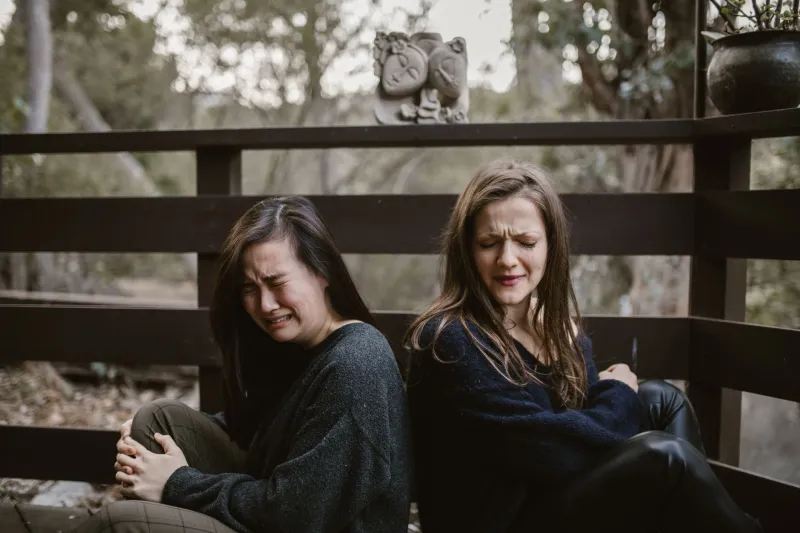
Somewhere between the third Instagram unfollow and the cryptic comment section subtweet, you realized it: your favorite celebrity duo was over. No official statement. No tearful joint video. Just a slow, painful erasure — and somehow, you felt it in your chest.
This isn't a niche experience anymore. Millions of people across the US are logging on, watching their favorite famous friendships crumble in real time, and processing something that genuinely feels like grief. Not metaphorical grief. The actual kind — the dull ache, the scrolling for answers, the weird need to talk it through with someone.
So what's going on here? Why does a falling out between two celebrities feel like your falling out?
We Were Never Just Watching — We Were Participating
The concept of parasocial relationships isn't new. Psychologists coined the term back in the 1950s to describe the one-sided bonds people form with media figures. But social media has taken that dynamic and turbocharged it in ways nobody fully predicted.
It used to be that you watched a star on a screen and felt connected from a distance. Now, you're watching them cook breakfast on a Story, seeing them tag each other in memes, listening to them gush about each other on podcasts. The intimacy feels real because it's designed to feel real. You're not just a fan in the audience — you're a participant in a rolling, daily narrative about people you've technically never met.
When two celebrities build that kind of visible, documented, shareable friendship, they're not just bonding with each other. They're folding their audience into the relationship. You become a third party to something that feels mutual — even though it isn't.
So when it ends? You're not just watching a friendship dissolve. You're losing a relationship you thought you had a seat in.
The Content Machine Made It Worse
Here's the uncomfortable part: a lot of celebrity friendships aren't just friendships. They're content strategies.
This isn't cynical conjecture — it's how the modern entertainment economy works. Two rising stars with overlapping fan bases collab on a video, post matching outfits, go to the same events, and suddenly their combined visibility doubles. Their managers know it. Their publicists know it. And on some level, they probably know it too.
That doesn't necessarily mean the connection is fake. Plenty of genuine bonds start in transactional spaces — work friendships are real friendships. But it does mean that what gets shown to the public is a highly curated version of the relationship, optimized for engagement and brand consistency.
The fan base gets fed a steady diet of inside jokes, matching aesthetics, and "ride or die" declarations. And then, when the content partnership quietly dissolves — when the collabs stop and the tags disappear — the audience is left holding the emotional weight of something that was always, at least partially, a performance.
The grief is real. But some of what we're grieving never quite existed the way we thought it did.
Why It Hits Harder Than It Used To
There's a reason this particular brand of heartbreak feels more acute now than it might have in, say, 2008. And a big part of it comes down to where a lot of us are socially.
Studies in recent years have pointed to a growing loneliness epidemic in the US, especially among younger adults. Fewer people report having close friendships. Social circles have shrunk. The pandemic accelerated a lot of that disconnection, and many people never fully rebuilt what they lost.
Into that gap walks the celebrity friend group — vibrant, affectionate, always doing something fun, always showing up for each other. It's not hard to see why people latch on. These relationships model something that feels increasingly rare: genuine, expressive, loyal friendship.
When you're watching from a place of loneliness, that group becomes more than entertainment. It becomes aspirational. It becomes a surrogate. And when it fractures, the loss doesn't just feel like losing a favorite TV couple — it feels like losing proof that the kind of connection you're craving actually exists.
The Unfollow Heard Round the Internet
Social media has also fundamentally changed how these breakups unfold — and how we experience them.
Celebrity friendship splits used to happen offscreen. You might notice two stars stopped being photographed together, and eventually a tabloid would confirm the obvious. The process had some distance built in.
Now, the dissolution happens on the platforms where the relationship was built. An unfollow is public. A missing tag is visible. A vague caption posted at a pointed moment is immediately screenshotted and dissected. The audience watches the relationship die in the same space where they watched it thrive, in real time, with comment sections full of other people processing it alongside them.
That communal grieving is its own thing. When thousands of people are simultaneously posting "I can't believe they're not friends anymore," it validates the feeling and amplifies it. The grief becomes a shared social event — which, ironically, brings people together over the loss of a connection they never personally had.
So What Do We Do With This?
The easy response is to tell people to "touch grass" or get some perspective. But that misses the point entirely. The emotions are real. The psychological mechanisms behind them are real. Dismissing the grief doesn't make it go away — it just makes people feel embarrassed about something that's actually pretty human.
What might be more useful is a little honest self-reflection. When a celebrity friendship split hits you unusually hard, it's worth sitting with the question of why. Is it genuinely about them, or is it touching something closer to home? A friendship you've lost, a connection you're missing, a loneliness you haven't quite named yet?
Sometimes the celebrities are just a mirror. The feelings they surface are worth paying attention to — not because their relationship mattered, but because yours do.
And maybe that's the strangest, most human thing about all of this: we can use even the most manufactured, mediated, content-optimized celebrity friendship as a doorway into something genuinely real about ourselves.
Just maybe don't spend three days in the comment sections about it. Your actual friends are probably texting you back right now.