You Think You're Choosing What to Watch. You're Not.
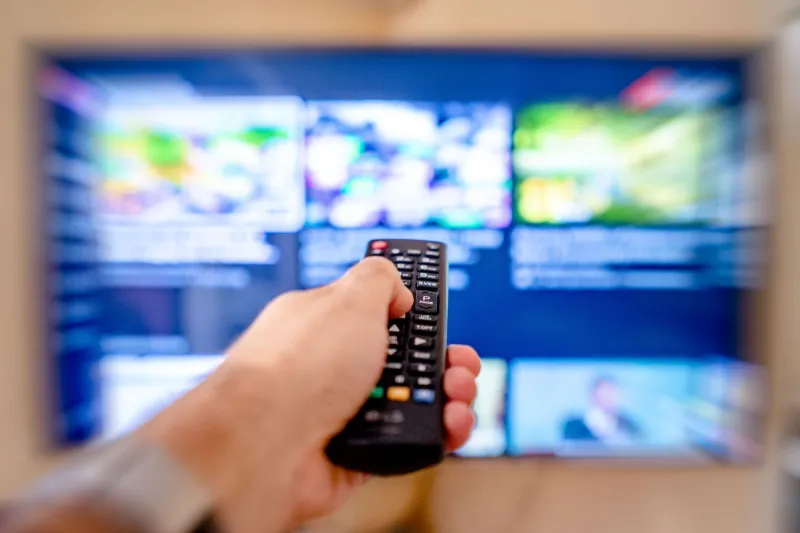
There's a particular kind of satisfaction that comes from finding a show you feel like you discovered. Not something your coworker hyped to death or a title plastered across every billboard in your city — but something that felt like yours. A little hidden gem that the algorithm just happened to surface one Tuesday night when you were too tired to be picky.
Except here's the thing: that feeling might be entirely manufactured.
Streaming platforms have quietly become some of the most sophisticated behavioral nudging machines ever built. And most of us have no idea how deep that goes.
The Recommendation Engine Is Not Your Friend
When you fire up a streaming service, you're not looking at a neutral library. You're looking at a carefully curated storefront that's been tailored — in real time — based on your watch history, your pause points, what time of day you're watching, how long you lingered on a thumbnail before scrolling past, and dozens of other micro-signals you never consciously registered.
Data scientists who've worked inside major platforms describe these systems as "engagement maximizers" — tools designed primarily to keep your eyeballs on screen for as long as possible, which isn't always the same thing as showing you what you'd actually enjoy most.
"There's a difference between content that satisfies you and content that hooks you," one former recommendation engineer explained in a recent interview, speaking anonymously because they still work in the industry. "The algorithm optimizes for the hook. Satisfaction is harder to measure, so it basically gets ignored."
What that means in practice is that platforms tend to surface shows and movies that trigger a quick emotional response — high-stakes drama, familiar faces, recognizable franchise names — rather than slower-burn content that might genuinely resonate with you on a deeper level.
The Illusion of Discovery
Here's where it gets uncomfortable. That sense of discovery you feel when you stumble onto something unexpected? Platforms actively engineer it.
Netflix, for example, has been transparent about the fact that it A/B tests thumbnail images to see which version makes you more likely to click. The same movie might appear with a dramatic close-up of a character's face for one user, and a moody landscape shot for another, depending on which visual profile is statistically more likely to get that particular viewer to commit. You're not browsing a library — you're being walked through a store that's been physically rearranged around your specific psychological profile.
Cultural critic and media scholar Dr. Janelle Moss, who has written extensively about algorithmic curation, calls this "the personalization paradox."
"We were sold personalization as freedom," she said. "More choices, tailored to you specifically. But what we actually got was a narrowing. When the algorithm decides what's relevant to you based on what you've already watched, it's essentially building a wall around your taste. It keeps showing you variations of the same thing."
This creates what some researchers call a "taste bubble" — a pop culture equivalent of the political filter bubble. You end up convinced that you have eclectic, wide-ranging taste, when really you've been quietly herded into a lane.
What Gets Lost in the Shuffle
The stakes here go beyond personal preference. When algorithms prioritize engagement over genuine discovery, entire categories of content get buried — not because audiences don't want them, but because they don't generate the same immediate click-through response as a splashy thriller or a nostalgia-bait reboot.
Independent films, international titles, documentary series, experimental storytelling — these are the formats that tend to fall through the algorithmic cracks. A subtitled Korean drama might be exactly what a viewer in Ohio would love, but if that viewer has never watched foreign-language content before, the algorithm may never surface it because the click-probability math doesn't pencil out.
"There are extraordinary stories being made all over the world right now," said Marcus Delray, a film programmer who curates independent cinema screenings in Chicago. "But if the algorithm decides you're a 'mainstream thriller person' based on three shows you watched during a stressful week, it may never show you anything else. That's a genuine cultural loss."
The financial incentives compound the problem. Streaming platforms don't just want you to watch — they want you to watch their content. Original productions cost money upfront, but they generate far more long-term value than licensed titles. So algorithms are frequently tuned to surface platform originals more aggressively than licensed content, regardless of quality or relevance to the viewer.
Can You Actually Beat the System?
Some viewers have started fighting back in small ways. Clearing watch history, using incognito modes, deliberately seeking out content through external sources like Letterboxd or niche subreddits before searching for it directly on a platform — these are the workarounds that die-hard cinephiles have been quietly employing for years.
But for the average viewer who just wants to relax after a long day, that level of intentionality isn't realistic. And platforms know that.
"Most people are going to take the path of least resistance," the former recommendation engineer noted. "The algorithm is betting on it. It's designed around it."
There's also a generational dimension worth considering. Younger viewers, particularly Gen Z, have grown up with algorithmic curation as a default state of media consumption — TikTok's For You page being the most extreme example. For them, the idea of browsing without algorithmic assistance feels almost foreign. Whether that represents a fundamental shift in how we relate to culture, or simply a new version of the same old passive consumption, is a question nobody has fully answered yet.
The Bigger Picture
None of this means streaming is bad, or that the shows you love aren't genuinely worth loving. But it's worth sitting with the uncomfortable question of how much of your entertainment identity has been quietly shaped by a system that was never designed with your authentic satisfaction in mind.
The algorithm didn't break up with us, exactly. It never loved us to begin with. It just needed us to stay on the couch a little longer.
Maybe the most radical act in the streaming era is the simplest one: occasionally turning off the recommendations entirely, picking something random, and seeing what happens. You might hate it. You might find your new favorite show. Either way, at least it'll be yours.