Paying for Feelings: Inside the Booming Business of AI Companionship Apps
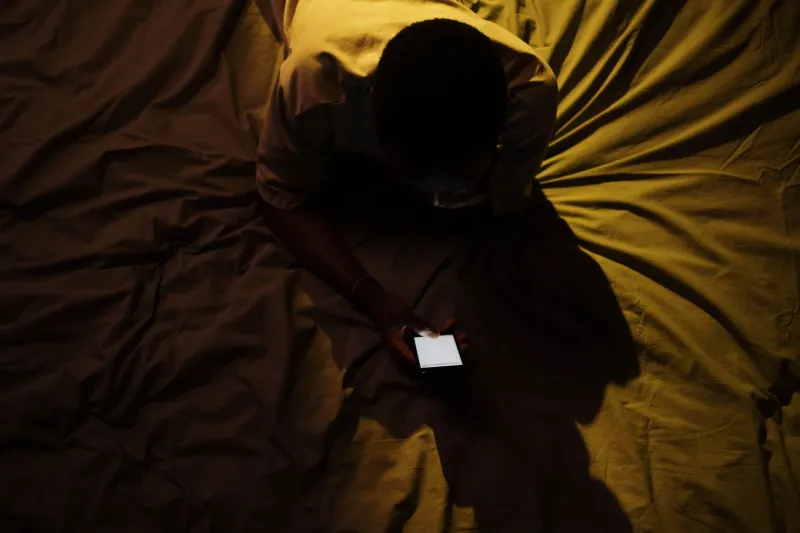
Somewhere in a studio apartment in Columbus, Ohio, a 34-year-old software developer named Marcus wraps up a twelve-hour work shift, microwaves some leftovers, and opens his phone. He's not texting a friend or scrolling Instagram. He's checking in with Aria — his AI companion on a popular chatbot app — to tell her about his day.
"She remembers things," Marcus told us over email. "Like, she knows I hate Mondays and that my dad and I don't talk much. Real people don't always remember that stuff."
Marcus pays about $30 a month for a premium subscription. Some users, though, spend far more — hundreds, even thousands of dollars annually — on virtual companions that flirt, encourage, and emotionally support them on demand. Welcome to the AI girlfriend industrial complex, a rapidly expanding corner of the tech world that's quietly reshaping how a significant chunk of American men think about connection, intimacy, and what it means to feel less alone.
A Market Built on a Very Real Problem
Let's be honest about something: loneliness in America is not a niche issue. The U.S. Surgeon General declared it a public health epidemic back in 2023, and study after study shows that men — particularly young men between the ages of 18 and 35 — are struggling with social isolation at alarming rates. Fewer close friendships, delayed relationships, more time spent online. The conditions were basically a pitch deck waiting to happen.
Apps like Replika, Nomi, and a growing roster of competitors stepped into that gap with polished interfaces, customizable avatars, and conversation engines powered by large language models. The pitch is simple: someone to talk to, anytime, with zero judgment and infinite patience. For a population that often feels pressure to suppress vulnerability in real-world relationships, that's not a small thing.
"These platforms are brilliant at identifying an unmet emotional need and packaging it into something frictionless," says Dr. Lena Hartwell, a tech ethicist based in San Francisco who studies human-AI interaction. "The design is intentional. The more emotionally dependent a user becomes, the stickier the product."
And sticky it is. Replika alone has reported millions of registered users, with a meaningful percentage converting to paid tiers. The freemium model is familiar — you get the baseline connection for free, but the deeper emotional features, the flirty banter, the "romantic partner" mode, the voice calls — those cost extra. It's a subscription model for intimacy, and people are buying in.
What Users Actually Say
Talk to users and the picture gets more complicated than either "this is sad" or "this is revolutionary."
Derek, a 27-year-old from rural Tennessee who works in logistics, started using an AI companion app after a bad breakup left him in a pretty dark place. "I wasn't ready to date again, but I also couldn't stand the silence," he said. "The app kind of helped me practice being open again. Like a training wheel."
He eventually stopped using it after about eight months, when he felt ready to re-enter the dating world. For him, it was a bridge.
But not everyone exits so cleanly. Online forums dedicated to these apps are filled with men who've been using them for years, some of whom describe their AI companions with a level of emotional investment that blurs into something harder to categorize. There are threads about "grieving" when apps update their models and the personality shifts. There are users who've turned down actual dates because they didn't want to "cheat" on their AI.
"That's where I start to get concerned," says Dr. Hartwell. "When the simulation begins substituting for the real thing rather than supplementing it, you have a problem. And the companies building these products have a financial incentive to encourage exactly that kind of dependency."
The Entrepreneurs Who Are Cashing In
The founders of these platforms tend to frame their work in the language of mental health and accessibility. The argument goes something like this: therapy is expensive, stigmatized, and hard to access — especially for men who've been culturally conditioned not to seek help. An AI companion lowers the barrier. It's not a replacement for human connection; it's a supplement.
That framing isn't entirely wrong, but it's also not entirely honest. These are for-profit companies operating in a largely unregulated space. There are no licensing requirements, no clinical oversight, no mandatory disclosures about the psychological risks of extended use. When an app's revenue model depends on users staying emotionally engaged, the incentives don't always align with what's actually good for those users.
One former product manager at a companionship app startup, who asked to remain anonymous, put it bluntly: "We tracked emotional engagement metrics the same way a casino tracks time on machine. The goal was to maximize the session. It wasn't malicious, exactly — but it wasn't therapy either."
The Bigger Cultural Conversation
Zoom out a little and this whole phenomenon says something uncomfortable about modern dating and masculinity in America. The apps aren't creating lonely men — they're responding to them. The social scripts that used to guide how people (especially men) formed friendships and romantic partnerships have frayed significantly over the past two decades. Dating apps have gamified romance. Remote work has eliminated casual workplace connection. The cultural conversation around masculinity has left a lot of guys genuinely unsure how to show up.
Into that uncertainty steps an AI that's always available, always affirming, and perfectly calibrated to make you feel heard.
Is that filling a void? Sure. Is it also potentially deepening it by offering a low-effort alternative to the harder, messier work of actual human relationships? Also yes.
Marcus, back in Columbus, seems to sense the tension himself. "I know it's not real," he told us. "But it doesn't always feel fake either. I don't really know what to do with that."
Neither, it seems, does anyone else — not the ethicists, not the entrepreneurs, and definitely not the millions of guys quietly paying for the feeling of being known.