Born Too Late or Right on Time? Why We're Obsessed With Decades We Never Actually Lived
The Kid Who Cried Over a Show That Ended Before They Were Born
Somewhere out there, a 19-year-old is genuinely grieving the end of Friends. Not because they watched it live on NBC in the late 90s — they absolutely did not — but because they binged all ten seasons on Netflix and now feel a very real, very specific kind of loss. Their parents watched the finale in real time. They watched it alone at 2am on a Wednesday.
And yet the feeling is the same.
This is retroactive fandom, and it's one of the stranger cultural phenomena of our current moment. People — mostly Gen Z and younger millennials — are developing intense emotional attachments to music, movies, TV shows, and entire aesthetic eras they never actually experienced firsthand. They didn't live through the Reagan years. They weren't in a Blockbuster on a Friday night. They never had to wait a whole week between episodes. But somehow, they feel like they did.
So what's actually going on here?
Nostalgia for a Memory You Borrowed
Psychologists have a name for the flavor of longing you feel for a time you never personally experienced: it's sometimes called "vicarious nostalgia" or "historical nostalgia." The basic idea is that you can absorb a sense of longing for an era through cultural exposure — movies, music, your parents' stories, old photographs — without having any direct memories of your own.
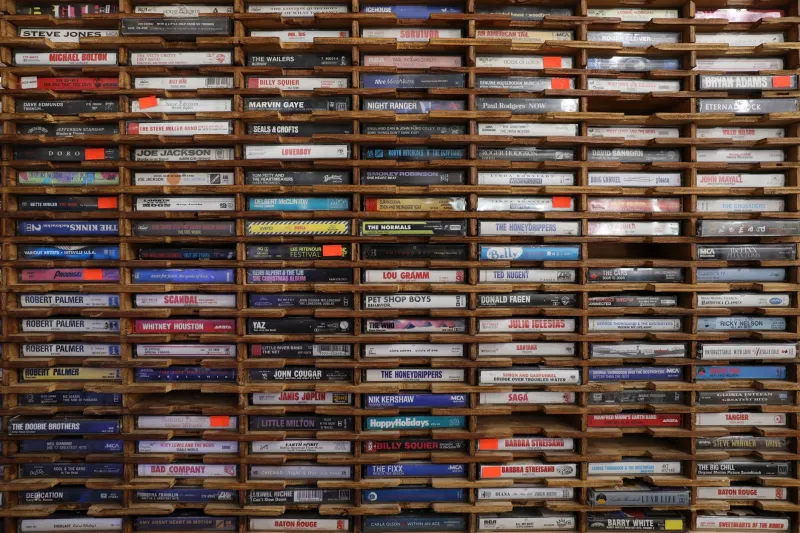
For a lot of young Americans, the 80s and 90s weren't lived experiences. They were inherited ones. You grew up watching your mom's VHS copy of Dirty Dancing. Your dad played Springsteen on road trips. Your older cousin had a box of cassettes in her closet and let you dig through them. These secondhand touchpoints create something that feels like memory even when it technically isn't.
Streaming made all of this exponentially easier. When you can access 40 years of pop culture with a few taps, the past stops feeling like the past. It becomes a permanent present tense — always available, always just one click away. The timeline collapses.
Why the 80s and 90s, Specifically?
Not every decade gets this treatment equally. Nobody's out here romanticizing the mid-2000s with the same intensity (though give it time). The 80s and 90s occupy a specific cultural sweet spot right now, and a big part of that has to do with how produced they feel in retrospect.
Think about it: neon color palettes, chunky sneakers, synth-heavy soundtracks, practical special effects, physical media you could hold in your hands. There's a texture to that era that feels almost handmade compared to the algorithmic smoothness of modern content. When everything today is polished to within an inch of its life and optimized for engagement metrics, the deliberate imperfections of a VHS-era film start to look less like limitations and more like choices.
There's also the fact that the entertainment industry has done an extraordinary job of repackaging those decades and selling them back to everyone. Stranger Things didn't just reference the 80s — it created an entire immersive aesthetic experience around them. The show became a gateway drug for a whole generation of kids who then went back and discovered the actual source material. John Carpenter. Steven Spielberg. The Clash. Kate Bush, who somehow became a TikTok phenomenon in 2022 off a song from 1985.
Entertainment Is Selling You an Era, Not Just a Story
Hollywood and the music industry figured this out a long time ago, but they've gotten increasingly sophisticated about deploying it. It's not just reboots and remakes anymore (though there are plenty of those). It's the vibe of an era being carefully extracted and repackaged for modern consumption.
A24 films have built an entire brand identity around a certain kind of tactile, slightly gritty visual language that evokes something pre-digital. Vinyl record sales have been climbing for years, driven largely by buyers under 35. Polaroid cameras. Film photography. Analog synthesizers. The market for "retro" isn't niche anymore — it's mainstream, and it's being actively manufactured.
This creates a weird feedback loop. Young audiences crave authenticity, so entertainment producers lean into aesthetics that signal authenticity. Those aesthetics get associated with the past. The past gets romanticized further. And the cycle continues, with each iteration getting slightly more removed from whatever the original thing actually was.
At some point, the nostalgia becomes its own original product.
What This Says About Right Now
Here's the part that's worth sitting with: why are so many young people reaching backward when they have access to more new content than any generation in history?
One honest answer is that the volume itself is the problem. When you're drowning in options — thousands of shows, millions of songs, an infinite scroll of content — there's something deeply comforting about a canon. A finite, agreed-upon set of things that mattered. The 80s had a soundtrack. The 90s had a look. There's a clarity to that which today's fractured, hyper-personalized media landscape just can't replicate.
Another piece of it is the search for community. Retroactive fandoms are weirdly good at creating belonging. When you're a 22-year-old who loves The Breakfast Club, you're instantly connected to everyone else who loves it — including people who are 45 and actually remember seeing it in theaters. That's a rare kind of cross-generational bridge.
And then there's the simpler, more uncomfortable truth: the present is hard. It's noisy and anxious and overwhelming. The past, even a past you never lived, feels quieter. Safer. More legible. You already know how it turned out.
The Era as a Parasocial Relationship
We talk a lot about parasocial relationships with celebrities and influencers — the one-sided emotional bonds we form with people we've never met. But retroactive fandom suggests you can form that same kind of relationship with an entire time period.
You feel connected to the 90s. You feel like it would have understood you. You mourn the fact that you missed it. That's not so different from feeling like a celebrity you follow online would be your best friend if they only knew you existed.
In both cases, you're projecting meaning onto something that can't actually respond to you. The 90s can't confirm whether you would have thrived in it. (Spoiler: for a lot of people, the answer would have been complicated.) But the idea of it — the curated, aesthetic-filtered, streaming-era version of it — absolutely can.
So Is It a Problem?
Not really, no. There's nothing inherently wrong with loving music or movies from before your time. Culture has always been inherited and reinterpreted across generations. That's kind of the whole point of it.
But it's worth being a little honest with yourself about what you're actually chasing when you deep-dive into a decade you never experienced. Is it the art itself? Or is it the feeling of having a past — a simpler, more cohesive story about who you are and where you came from?
Because if it's the latter, that's less about the 80s and more about right now. And that might be the more interesting conversation to have.