Famous and Mysterious: Why Stars Are Selling You 'Access' While Keeping You at Arm's Length
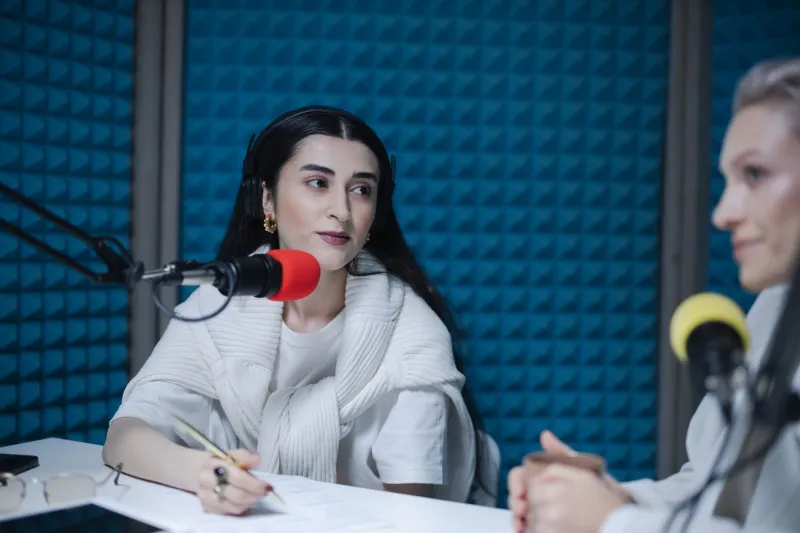
There's a particular kind of celebrity content that feels different from the usual stuff. It's not the magazine profile with the careful quotes. It's not the press junket where everyone's promoting the same movie. It's the 2 a.m. voice memo dropped on a Substack. The podcast episode where someone cries, just a little. The behind-the-scenes clip that feels like you accidentally wandered into a room you weren't supposed to be in.
That feeling — of stumbling into something private — is worth a lot of money right now. And the stars cashing in on it know exactly what they're doing.
The New Currency Is Closeness
For most of Hollywood's history, mystery was the brand. Stars were distant, curated, and larger than life. The whole machine was built on keeping audiences at a specific remove — close enough to be obsessed, far enough to stay mythologized.
Something shifted. Audiences, particularly younger ones, started losing interest in the untouchable ideal. They wanted to feel like they knew the person, not just the persona. And celebrities — or more accurately, the very savvy teams around them — noticed.
The response wasn't to actually become more accessible. It was to create products that simulate accessibility. Patreon tiers. Exclusive Discord servers. Podcast series billed as "unfiltered conversations." Platforms like Substack or even OnlyFans (yes, the non-explicit version that a surprising number of mainstream celebrities have quietly joined) offering content that exists just outside the reach of regular media.
The pitch is always some variation of the same thing: this is where the real me lives. Everything else? That's for them. This is for you.
The Architecture of Controlled Vulnerability
What makes this trend genuinely fascinating — and a little unsettling — is how precisely calibrated it is.
When a major pop star cries on her podcast about a relationship, that moment doesn't happen in a vacuum. There's a producer. There are decisions about what stays in and what gets cut. There's a release date, probably timed to something — an album drop, a press cycle, a narrative that needed a humanizing beat. The tear is real. The architecture around it is engineered.
This isn't a cynical observation so much as just an accurate one. These are professionals. Their teams include people whose entire job is managing perception. The idea that intimacy marketing exists outside of that system is the thing we're being sold — and a lot of us are buying it enthusiastically.
That's not necessarily a problem, by the way. People have always found meaning in parasocial relationships. The parasocial bond between a fan and their favorite artist or actor can be genuinely nourishing — a source of comfort, community, identity. The question worth asking is whether the new model is more honest about what it is, or whether it's just more sophisticated at disguising itself.
What You're Actually Paying For
Let's talk about the economics for a second, because they're revealing.
When a celebrity launches a subscription platform or a paid newsletter, they're essentially creating a tiered intimacy system. The more you pay, the more access you get — or the illusion of it. This model is clever because it reframes the transaction. You're not buying content. You're buying a relationship. A sense of belonging to something smaller and more exclusive than the general public.
Some celebrities have been remarkably transparent about this dynamic, almost to the point of winking at it. Others lean into the sincerity so hard it becomes its own kind of theater.
What's interesting is that audiences often know, on some level, that the intimacy is managed. And they opt in anyway. Because the feeling it produces — of being seen, of being close to someone extraordinary — is real even when the mechanism producing it isn't entirely spontaneous.
The Stars Who've Made It an Art Form
Some names in this space have essentially built second careers out of the intimacy marketing model. You've got musicians who've cultivated followings so devoted that fans will pay for everything from handwritten letters to exclusive listening sessions to podcast episodes where the star just... talks. No agenda. No promo. Just vibes — or the appearance of them.
Then there are the actors who've stepped back from traditional press almost entirely, choosing instead to surface through curated social posts or appearances on podcasts hosted by friends. The message is subtle but clear: I'm not performing for the machine. I'm choosing to share this with you.
The traditional entertainment press, meanwhile, is having an identity crisis. When celebrities control their own distribution and their own narrative, the glossy magazine profile becomes less valuable. Why sit across from a journalist who might ask uncomfortable questions when you can have a long conversation with a sympathetic host, on your own platform, released on your own schedule?
Is Anyone Actually Getting Closer?
Here's the honest question underneath all of this: when you subscribe, when you tune in, when you pay for the exclusive tier — are you getting closer to a real human being? Or are you getting a more immersive, more convincing, more expensive simulation of one?
The answer is probably both, depending on the celebrity and the moment. Some of what gets shared in these spaces is genuinely unguarded. Some of it is as carefully constructed as any press release, just dressed differently.
What's changed isn't necessarily the authenticity of the content. It's the packaging. The old model said: here is a star, observe them from a distance. The new model says: here is a person, come closer. Whether that person is actually there when you arrive is the question nobody's quite figured out how to answer.
And maybe that ambiguity is the point. The not-quite-knowing keeps you subscribed, keeps you listening, keeps you coming back for the next episode where maybe, just maybe, you'll finally get the real thing.